
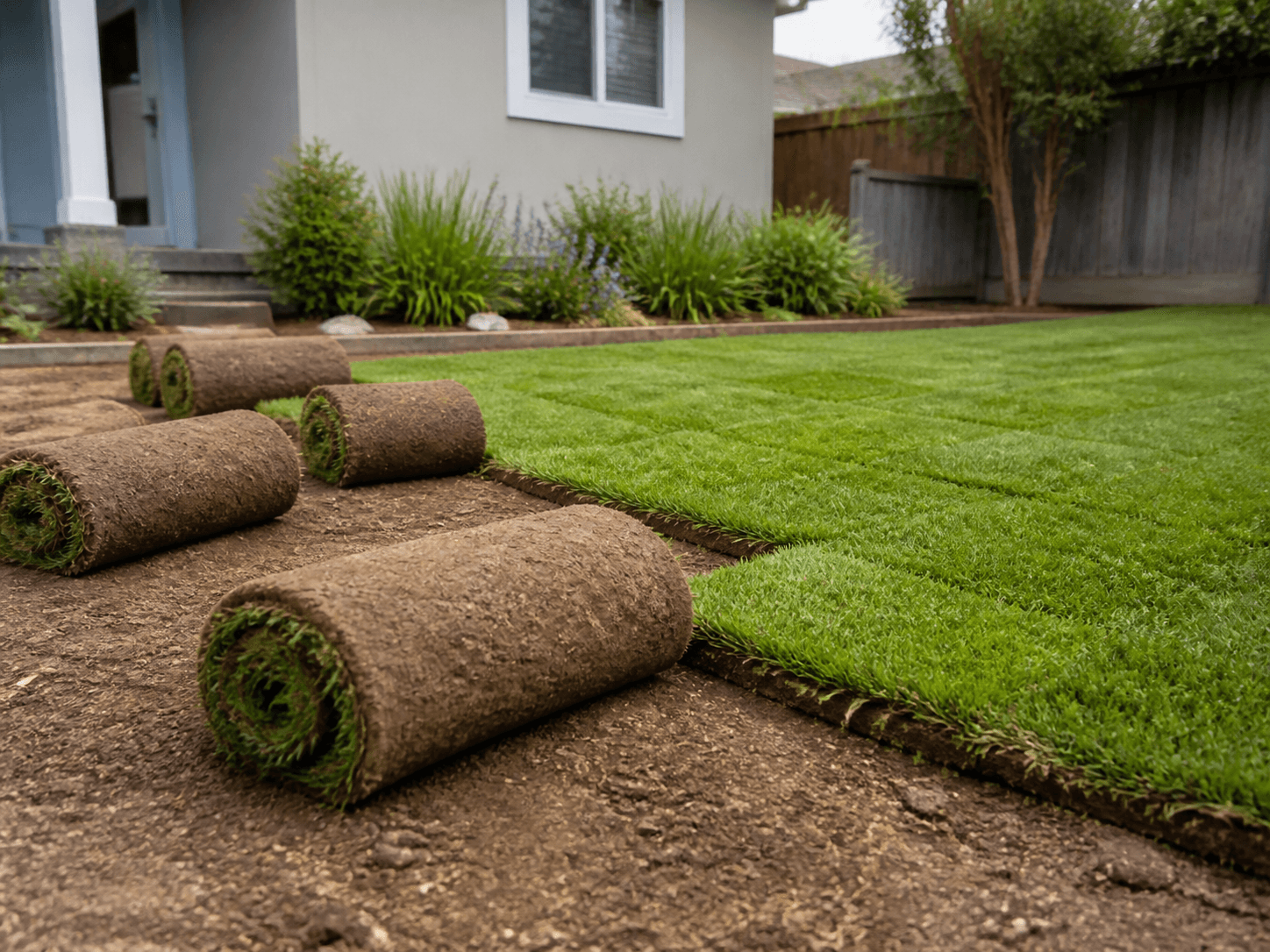
A faster route from bare soil to a new lawn
Sod provides an established grass surface sooner than starting a lawn from seed, but the finished result depends heavily on what happens before the rolls arrive. Old turf, weeds, compacted soil, uneven grade, irrigation gaps, and poor contact with the prepared soil can all affect establishment.
A sod request therefore starts with the area, current ground condition, sunlight, drainage, access, and watering capability. The project scope should also identify removal, disposal, soil preparation, grade adjustments, and edge details instead of assuming every lawn is ready for installation.
When to consider sod installation
Sod installation may be worth considering for areas with:
- Bare soil where a usable lawn surface is wanted without a long seeding period
- A patchy or failed lawn that no longer responds to routine maintenance
- Multiple incompatible turf patches that create an uneven appearance
- Surface irregularities that should be addressed as part of lawn replacement
- A defined yard area that is being prepared for a broader landscape refresh
What the service can include
Every lawn requires a site-specific scope. Depending on the approved plan, sod installation can include:
- Measuring the install area and reviewing sun, access, drainage, and irrigation
- Removing specified existing turf or surface growth when included
- Preparing and smoothing the upper soil surface for sod contact
- Laying, fitting, and rolling fresh sod across the approved area
- Initial watering and practical guidance for the early establishment period
Prepare new turf for a coastal Seaside yard
Seaside's mild coastal climate can still produce meaningful differences between windy, sunny, shaded, and protected parts of a yard. Turf selection and watering should reflect the actual site. Existing irrigation coverage is particularly important because newly laid sod needs consistent early moisture without creating runoff or persistent pooling.
Sod is a living material, not a finished hard surface. It requires an establishment period before normal foot traffic and maintenance resume. Watering must follow current local requirements, and the schedule may need adjustment for weather, soil, slope, shade, and visible turf response.
How the process works
Planning focuses on correcting the lawn area's obvious limitations before fresh turf is installed.
- Assess the lawn area. Measure the proposed footprint and review access, old turf, weeds, soil surface, sunlight, grade, drainage, and irrigation coverage.
- Confirm preparation. Define removal, disposal, soil work, minor grade corrections, edge transitions, sod choice, and material access.
- Prepare and install. Complete the approved preparation, place sod promptly, fit seams and edges, and establish contact with the prepared surface.
- Begin establishment. Apply the initial watering plan and discuss early moisture checks, traffic limits, and the transition to routine lawn care.
Sod Installation questions
Can sod be installed over an old lawn?
Placing sod directly over existing turf usually prevents good soil contact and can preserve underlying weeds or unevenness. The current lawn and preparation needs should be reviewed before an installation method is confirmed.
How soon can new sod be walked on?
New sod needs time to root into the prepared soil. Timing varies with turf, weather, soil, and care, so unnecessary traffic should be limited until establishment is evident and maintenance guidance is provided.
Does the irrigation system need to work before installation?
A reliable and compliant watering plan should be in place before sod arrives. Existing zones may need coverage checks or adjustments so new turf can establish evenly.
Will sod fix a drainage problem?
No. Sod may cover the surface temporarily, but standing water, concentrated runoff, or a significant low spot should be understood before turf is installed.