
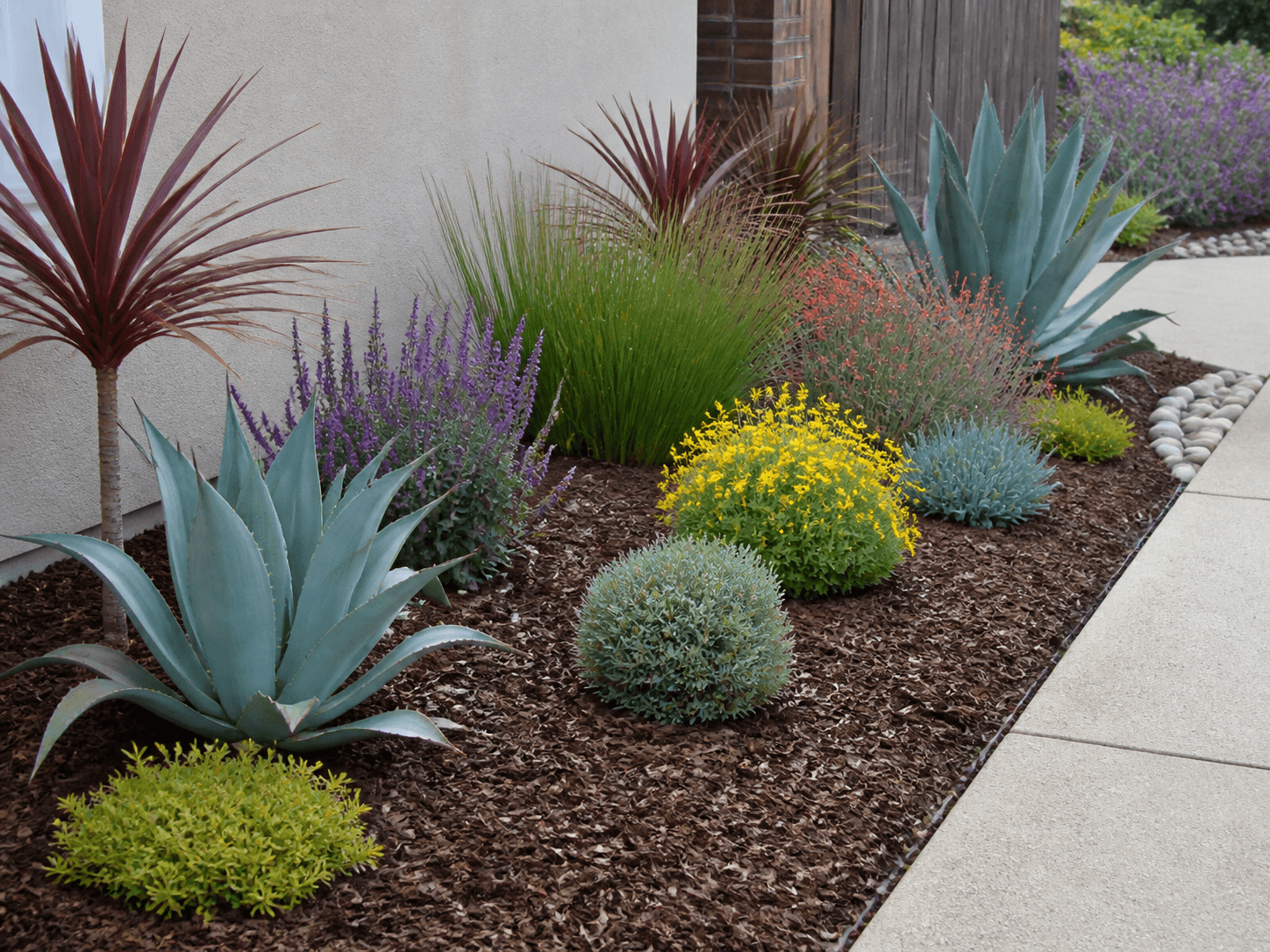
Refresh bare, thin, or difficult planting beds
Planting and mulch can make a noticeable difference without redesigning an entire yard. New plants add structure and seasonal interest, while mulch gives beds a finished surface, limits exposed soil, and can help moderate moisture loss. The best result starts with the conditions in each bed rather than selecting plants only by appearance.
Sun exposure, coastal wind, mature size, irrigation, drainage, pet or foot traffic, and the amount of future maintenance all influence the plan. Those factors are especially important around Seaside and the Monterey Peninsula, where two sides of the same property may have very different shade and exposure.
When to consider planting & mulch
A planting-bed refresh may be appropriate when the landscape has one or more of these issues:
- Bare beds or open soil that make the yard look unfinished
- Old mulch that has thinned, shifted, faded, or mixed into the soil
- Plants that are poorly matched to available sun, space, or watering
- Large gaps left after removing dead, crowded, or unwanted plants
- Bed edges that have lost definition next to lawns, paths, or driveways
What the service can include
The plant list, quantities, materials, and preparation are approved before installation. The scope can include:
- Review of bed dimensions, sunlight, visible drainage, and existing irrigation
- Selection of climate-appropriate plants based on the desired look and maintenance level
- Removal of specified small plants or bed debris when included
- Basic bed preparation, plant placement, installation, and initial watering
- Mulch installation with appropriate clearance around trunks, stems, and structures
Choosing plants for a Seaside landscape
Coastal conditions can include wind, fog, mild temperatures, and periods of limited rainfall. A plant that succeeds in a protected courtyard may struggle in an exposed front yard, so the plan should consider microclimates as well as the broader local climate. Mature plant size also matters on compact residential lots, where an oversized shrub can quickly crowd a path or window.
Mulch supports a planting plan, but it does not correct every soil, weed, or drainage issue. The material and depth should fit the bed, and mulch should not be piled against woody stems or building surfaces. If water is ponding or running away from the bed, drainage or irrigation work may need to be considered separately.
How the process works
Planting work moves from site conditions to an approved plant and material plan.
- Review the beds. Identify the planting areas, sun and wind exposure, existing plants, irrigation, access, and desired level of upkeep.
- Choose a practical direction. Discuss color, form, mature size, water needs, mulch preference, and any plants or materials to avoid.
- Confirm plants and quantities. Approve the proposed selections, substitutions, preparation, placement, and material scope before installation.
- Prepare and install. Complete the agreed bed preparation, planting, initial watering, mulch application, and work-area cleanup.
Planting & Mulch questions
Can you help choose plants for coastal Seaside conditions?
Plant suggestions can be shaped around the bed's sunlight, wind exposure, available irrigation, space, and desired maintenance. Final suitability depends on the actual site and plant availability.
Do I need irrigation before adding plants?
New plants need a reliable watering plan. Existing irrigation should be checked for suitable coverage, or another practical watering approach should be agreed on before installation.
Does mulch stop all weeds?
Mulch can reduce exposed soil and make some weed growth easier to manage, but it does not eliminate future weeds. Existing perennial weeds and seeds may continue to require attention.
Can you refresh an existing bed without replacing every plant?
Yes. A scope can focus on preserving suitable established plants, filling selected gaps, redefining edges, and adding fresh mulch rather than starting over.