
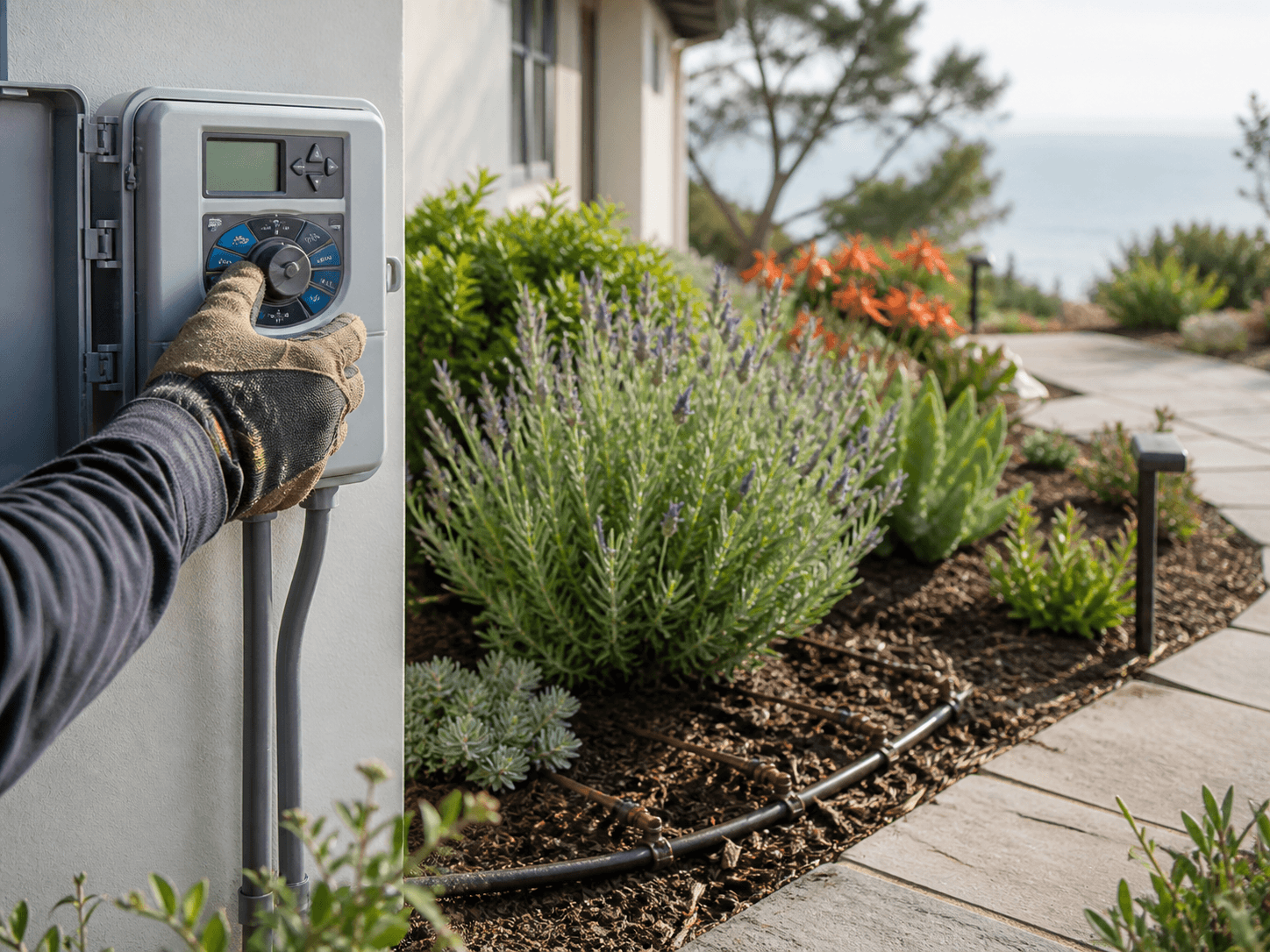
Manage the landscape as a complete water system
Outdoor water performance depends on more than the controller. Plant selection, root depth, irrigation type, pressure, coverage, soil, slope, mulch, wind, shade, and seasonal weather all affect how much applied water reaches the landscape and how much is lost to runoff or evaporation.
Landscape water management can identify practical priorities for an existing yard or support a larger landscape plan. The goal is to understand where water goes, group compatible needs, correct visible waste, and build a more manageable approach—not promise a fixed bill reduction without measurements and site review.
When to consider water management
A water-management review may be useful for:
- A property with both dry areas and consistently wet or muddy zones
- Overspray, runoff, misting, leaking components, or watering of pavement
- Plants with very different water needs sharing the same irrigation zone
- A controller schedule that has not been adjusted for season or exposure
- A planned lawn conversion, planting project, or phased landscape renovation
What the service can include
Depending on the property and requested depth, the review can include:
- Walk-through of irrigation zones, visible components, coverage, runoff, and leaks
- Review of plant groupings, sun, wind, slope, soil surface, and mulch conditions
- Controller and seasonal scheduling recommendations within the confirmed system scope
- Prioritized repairs, drip conversions, hydrozone changes, or planting adjustments
- Coordination with landscape planning, drainage, mulch, and irrigation-service needs
Water-wise planning for Seaside and the Monterey Peninsula
The Monterey Peninsula depends on limited local water supplies, while coastal properties can vary from foggy sheltered beds to windy areas that dry quickly. Efficient management responds to those microclimates instead of giving every zone the same runtime.
Larger new or renovated landscapes may be subject to California's Model Water Efficient Landscape Ordinance or local requirements. Any required water budget, audit, permit documentation, or professional certification must be confirmed for the actual project.
How the process works
The process connects landscape observations to a prioritized water plan.
- Define the concern. Identify high bills, visible waste, dry plants, soggy zones, planned improvements, or another reason for reviewing outdoor water use.
- Observe zones and conditions. Review controller information, irrigation operation, plant groups, exposure, slope, soil surface, mulch, and drainage patterns.
- Prioritize improvements. Separate urgent leaks and failures from scheduling, coverage, planting, soil, mulch, or system-upgrade opportunities.
- Adjust and monitor. Complete the approved scope, document settings when applicable, and observe plant response and runoff over time.
Water Management questions
Is water management different from sprinkler repair?
Yes. Sprinkler repair addresses damaged or poorly operating components. Water management also considers schedules, plant groups, soil, mulch, slope, runoff, and broader landscape decisions.
Can you guarantee a lower water bill?
No fixed savings should be promised without reliable baseline data, measurements, the completed scope, and information about other property water use. The service can identify visible waste and practical efficiency opportunities.
Should all plants use drip irrigation?
Not necessarily. The suitable application method depends on plant type, root area, soil, grade, layout, existing infrastructure, and applicable requirements.
What information helps with a review?
Provide controller photos, irrigation-zone notes, recent landscape changes, known leaks, water-use concerns, and photos of dry, wet, or runoff-affected areas.